

Email can help a childcare center share timely updates with current families and keep interested families informed. It works best when messages are useful, permission is clear, and families can unsubscribe or update their preferences easily.
Build a permission-based list
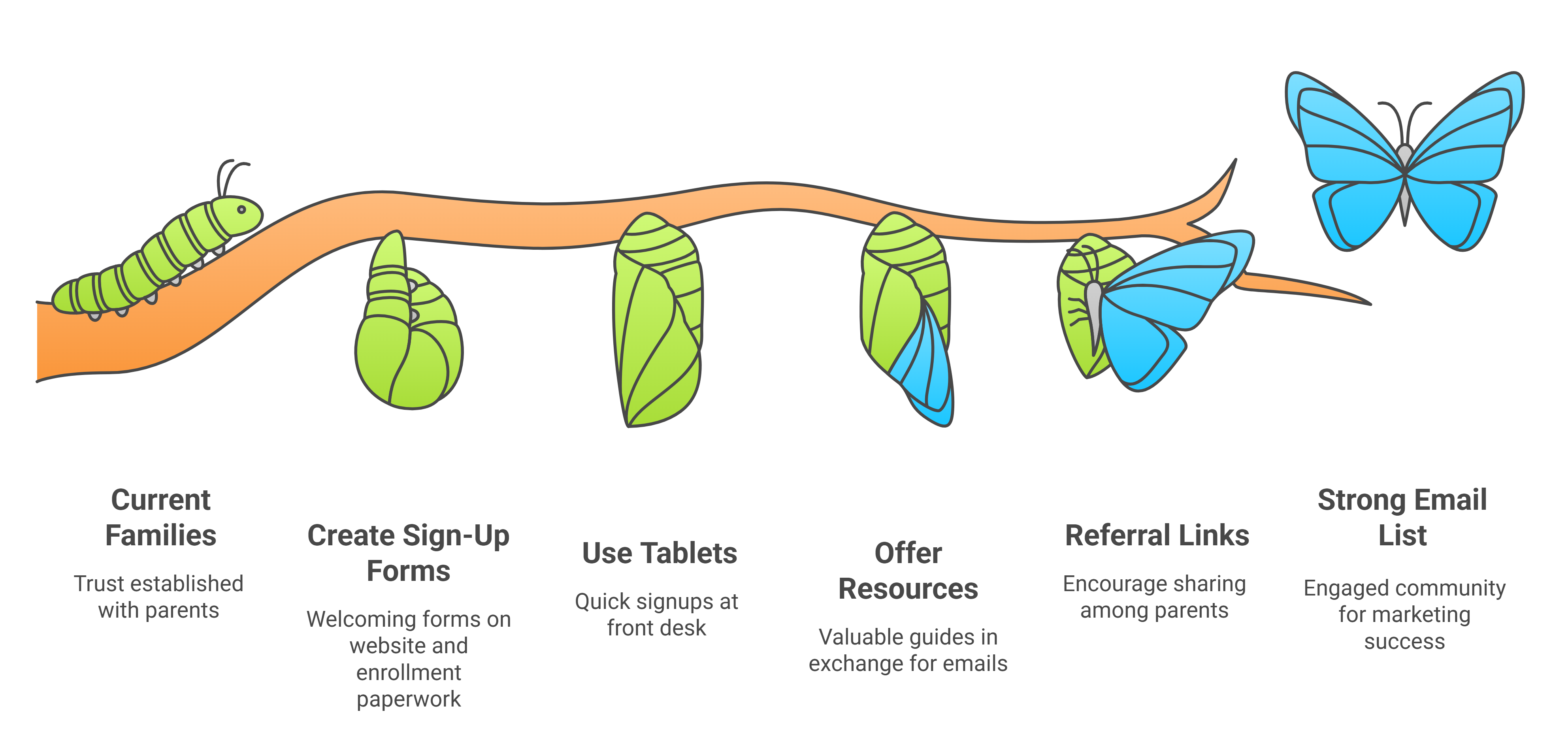
Collect addresses through clear sign-up forms, enrollment processes, events, or resource downloads. Tell families what they will receive and how often. Record the source of each address and follow applicable consent, privacy, and anti-spam requirements.
Do not purchase lists or upload addresses without a lawful basis and appropriate permissions.
Segment by need
A simple segmentation plan can make messages more relevant. You might group families by age group, program, start date, language, or requested resource. Keep the data you collect necessary for the purpose and review it regularly.
Families should be able to update their preferences. Avoid sending a message that has no useful information for the recipient.
Plan a small set of recurring messages
A practical calendar might include:
- A welcome message with key center information
- Monthly family updates
- Event and enrollment reminders
- Short child-development or resource guides
- Operational messages when families need them
Use a consistent layout, accessible text, and a clear call to action. Keep transactional details separate from promotional content when your email system allows it.
Questions families often ask
How often should a center send email?
There is no single correct frequency. Choose a schedule that keeps families informed without overwhelming them, and adjust based on engagement, complaints, and the needs of the center.
Can email improve parent-teacher communication?
It can support communication by sharing updates and reminders, but it should complement, not replace, conversations, meetings, emergency procedures, or direct contact when a family needs help.
How should unsubscribes be handled?
Respect unsubscribe requests promptly, keep required transactional messages separate where applicable, and make preference management easy to find.