
Web design for Edmonton childcare
Website Design for Childcare Centres in Edmonton
Edmonton’s child care costs a flat, regulated fifteen dollars a day for children kindergarten age and younger, and the province’s ten dollar promise has still not been delivered. The Minister for Education and Child Care said publicly in March 2026 that Alberta is struggling to reach that goal, and the federal government has not committed to closing the gap. Families here are making enrolment decisions against a number that is knowable, and your website should state it accurately rather than repeating the pledge.
What a Edmonton Website Needs
A flat regulated $15/day
About $326.25 a month full-time, unchanged for 2026-27. State it precisely rather than repeating the $10 pledge.
No separate infant rate
Under the flat fee structure infants and toddlers are covered by the same $15 daily figure. Say so plainly.
The subsidy is for school age
The Child Care Subsidy Program covers kindergarten through Grade 6, with income under $90,000.
Early Learning and Child Care Act
Licence required above six children. Daycare, preschool and out-of-school care are distinct programs.
Real neighborhood figures
Griesbach 23.6% aged 0-14, Windermere +41% since 2016, Clareview highest under-5 share. Label them 2021 Census.
Growth is normalizing
Metropolitan growth eased from 3.1% to a forecast 1.5% for 2026 as migration moderated.
Your website is the first tour most Edmonton families take
Before anyone calls, most families have already walked your website on a phone, usually at night, usually between a shift change and a bedtime. They are checking three things: whether you are close to them, what you actually charge, and whether there is a spot for their child. A site built for that job answers those questions quietly, without making anyone email you for basic information.
01
State the fee correctly, because Alberta changed how it works
Alberta charges a flat fifteen dollars a day for children kindergarten age and younger at a licensed daycare or family day home that receives affordability funding, which is about three hundred and twenty-six dollars a month full-time or two hundred and thirty part-time. That has been the structure since April 2025, when the province moved from an average to a flat fee, and it is confirmed unchanged for 2026 and 2027. The ten dollar target has not been reached: the federal goal was an average of ten dollars a day by March 2026, and the Minister said in March 2026 that Alberta was still struggling. Do not write ten dollars on your page. Write fifteen, and say what it includes.
- Mobile-responsive layouts
- Child-friendly visual elements
- Customized branding integration
- Accessibility features
- Cross-browser optimization
02
There is no separate infant rate, and that surprises people
Under Alberta's flat fee structure there is no age-based difference. Eligible infants and toddlers are covered by the same flat fifteen dollar daily or three hundred and twenty-six dollar monthly figure. This is a genuine and slightly counterintuitive fact, and stating it clearly will filter out the families who are expecting an infant premium that does not exist. It is also one of those details that makes a site look like it was written by somebody who actually works in the sector.
- Online enrollment forms
- Secure parent portals
- Program scheduling systems
- Real-time chat features
- Notification system
03
The subsidy is for school-age children, not for your under-fives
The Alberta Child Care Subsidy Program covers children twelve and younger in full-time kindergarten or grades one to six, with family income under ninety thousand dollars, and pays up to six hundred and forty-four dollars a month for the lowest income band in full-time facility-based kindergarten care. Under-fives are covered by the flat fee, not by this subsidy. Most websites get this backwards. Getting it right tells parents you understand how the money actually moves, which is exactly what they are trying to work out.
- SSL certification
- Secure data handling
- Two-factor authentication
- Payment encryption
04
Name the neighborhoods with the young families, using real figures
Griesbach has 23.6 percent of residents aged zero to fourteen against a metropolitan average of 18.6 percent, and grew 21 percent between 2016 and 2021. Windermere is the strongest new-suburb case, with 24.4 percent aged zero to fourteen, 85.9 percent of homes built since 2011, and 41 percent growth over that period. Clareview Town Centre has the highest share of under-fives of any neighborhood examined, at 8.3 percent, in a dense and very diverse condo district. Terwillegar is affluent, with a median household income around one hundred and fifty-one thousand and almost entirely detached housing. Use the ones you serve, and label the figures as 2021 Census data.
- Content Management System
- Database optimization
- Performance monitoring
- API integrations
05
Get the licensing categories right, because they are not the same thing
Alberta's Early Learning and Child Care Act and its Child Care Regulation are the governing instruments, and a licence is required to operate a program for more than six children. Within that, a facility-based licence covers daycare, preschool and out-of-school care as three distinct program types, each with different fee mechanics. A family day home operates under a licensed agency rather than self-licensing. Only out-of-school care is not eligible for the affordability funding. If your site blurs these together, it will mislead parents comparing you against a home-based provider.
- Local SEO optimization
- Analytics integration
- Marketing tool compatibility
- Content strategy
- Conversion tracking
06
Design for a market that is growing, but more slowly than it was
Edmonton's metropolitan population grew 3.1 percent between 2024 and 2025, with 2026 growth forecast to ease to 1.5 percent as net international migration moderates sharply. Housing starts in the metropolitan area hit 21,337 in 2025, a record since 1990, and 15,902 in the city, up 17 percent. The demand is real and it is coming from new housing in specific corridors. Building a site that speaks to those corridors, rather than a generic boom narrative, is the more defensible position.
- Regular updates
- Security monitoring
- Content management
- Performance optimization
- 24/7 support
How It Comes Together
Week 1-2
Week 3-4
Launch
Fee, area and licence audit
Design, build and mobile pass
Publish, verify and hand over

Name the neighborhoods that are actually growing
An Edmonton parent in Griesbach or Windermere wants to know you are close before they care what your logo looks like, and those are the corridors where the new housing is. Naming the communities you actually serve brings in families who can genuinely enrol, and being honest about your limits filters out the drive-by enquiries that were never going to convert.





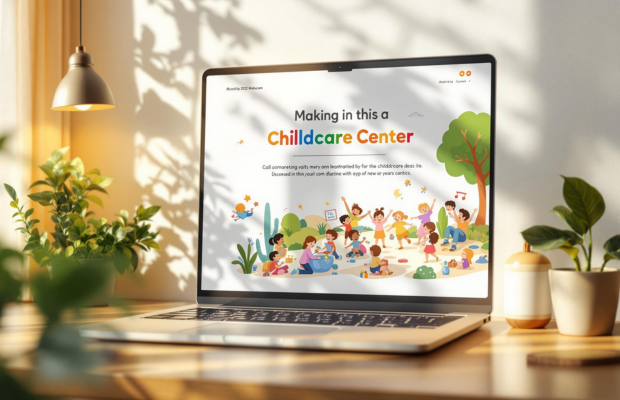
how we help
Website Design For Edmonton Childcare Centres
01
Honest Assessment First
We start by telling you whether a redesign is right, or whether a smaller fix would serve you better. A new site is not always the answer.
02
Edmonton-Ready Build
A site built around the questions Edmonton parents actually ask: fees, neighborhoods, licensing and waitlists, answered plainly and verified against current sources.
03
Built to Fill Spaces
Mobile-first, fast, and structured around enrollment. Real local content, not a template with your logo on it.
Planning a new website for your Edmonton centre, or stuck with one that is not filling spaces? Get in touch and we will tell you honestly what we would do first.